 11
11 No other pattern in fashion has been as desired, imitated, or debated as the Louis Vuitton monogram. This famous motif has led to lawsuits, inspired artists, and attracted both admiration and criticism worldwide. Now, 130 years after it was created, the LV monogram stands for more than just luxury. It reflects how we think about status, authenticity, and desire. The true story behind these famous initials is even stranger than any legend the brand has shared.
By 2026, the Louis Vuitton Monogram will be 130 years old. Georges Vuitton designed it in 1896 to serve as both a signature and a shield. He wanted each piece to be clearly authentic and to stop imitators. Counterfeiting was already a problem in Paris, so Georges put his father’s name on every item. This mark promised authenticity long before it became a decorative symbol.
Louis Vuitton died in 1892, just four years before the monogram was created. He started the company in 1854 with a luggage shop in Paris and introduced flat-topped trunks that changed travel. By the 1890s, the brand was so popular that counterfeiting became a serious threat. The monogram was a practical solution: fakes were everywhere, and the brand’s reputation was at risk. Georges tackled the problem with an artist’s eye. He looked at popular styles in late 19th-century Paris, like Art Nouveau with its flowing lines and natural shapes, and Japonisme, the Japanese influence on European design. He designed a pattern so detailed that it was very hard to copy by hand. This complex design made it much harder for counterfeiters to succeed.
There’s a charming family detail tucked into the story, too. Some say the four-petaled flowers and diamond shapes were inspired by the ceramic tiles in the Vuitton family kitchen in Asnières, the very place that became the brand’s headquarters. Those tiles, with their thistles and geometric patterns, were part of Georges’s daily life. Thanks to Joséphine Vuitton, who lived in the house until she was 103 and never changed a thing, this bit of heritage survived. It’s possible that the world’s most famous luxury pattern began its journey on a humble kitchen floor.
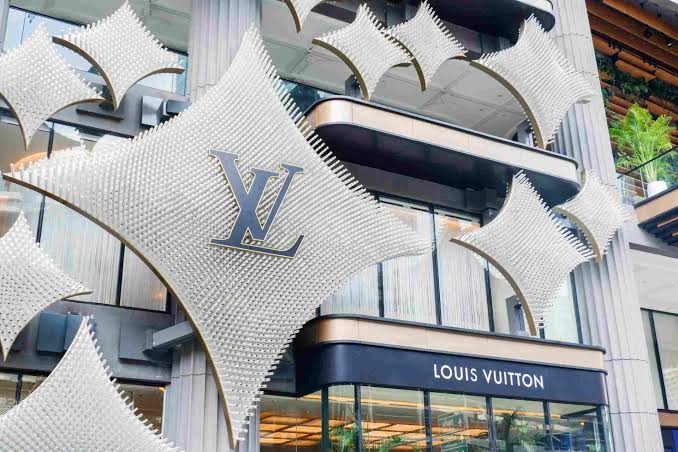
The real strength of the monogram lies in how it’s built. The LV initials weave together with flowers and quatrefoils, forming a seamless, repeating surface that never loses its sense of order. This wasn’t just for show—it was a deliberate choice. A perfectly repeating pattern is far trickier to fake than a single logo or a basic repeat. Every edge and corner has to match up. If even one piece is out of place, the imitation gives itself away. That was exactly the point.
At first, the monogram worked as planned and kept fakes away. But then something unexpected happened, likely beyond what Georges Vuitton imagined. The pattern itself became what people wanted to show off, not just own.
Since its creation in 1896, the LV Monogram has become one of fashion’s most recognizable and enduring symbols. Its shift from a security feature to a status symbol happened slowly. In the early years, the monogram was most commonly seen on large luggage such as suitcases, hat boxes, and travel trunks, owned by aristocrats, industrialists, and European royalty. The Duchess of Windsor reportedly owned more than 80 custom Vuitton pieces.
It wasn’t until later that the monogram made its way onto handbags and everyday accessories. The Speedy, for example, was famously created in a smaller size at Audrey Hepburn’s request, while the Keepall helped define Vuitton’s relaxed take on luxury. As the brand moved from trunks to handbags, the monogram stepped out of luggage compartments and into the public eye, ready to be noticed by everyone.
This marked a turning point for the monogram’s meaning. It began as a way for owners to quietly check if their item was real, but soon people wanted to show it off so others could see their status. The purpose changed, but the design stayed the same. The features that made it easy to spot as genuine—its unique look, complexity, and visibility from far away—also made it a strong status symbol.
Psychologists call this signaling theory. People pick visible luxury items to show their social status. The Louis Vuitton monogram became one of the most powerful status signals in fashion history. You can see it from across an airport, spot it in a crowd, or recognize it in a photo. The monogram stands out wherever it is used. A campaign looks cinematic, and a store feels like a special place.
But here’s where the story takes a more complicated turn.
The monogram that Georges created to stop counterfeiting is now, 130 years later, the most counterfeited design in the history of luxury. According to Entrupy’s 2026 report, Louis Vuitton alone accounts for a third of all products authenticated. Louis Vuitton is the most counterfeited luxury brand, accounting for 32.76 percent of all Entrupy submissions for luxury goods. Between January 1 and June 30, 2026 alone, Louis Vuitton and Rolex were tied as the most frequently referenced brands in US Customs and Border Protection fashion and luxury announcements, each appearing in 13 separate seizure reports.
The very design that was supposed to be impossible to copy has become the most copied in the world. But this isn’t really a failure; it’s actually a strange kind of success. When a pattern is copied everywhere, it means people see it as valuable. Counterfeiters don’t bother with brands that no one wants. up everywhere, especially in places the brand never intended, it becomes harder to protect that sense of exclusivity. Louis Vuitton’s answer is a mix of enforcement and careful authentication. What sets the brand apart in the long run isn’t just the look, but the experience: the materials, the craftsmanship, and the after-sales care are all difficult to copy at scale. Counterfeits threaten more than just revenue—they put the brand’s very identity at risk.
For luxury brands, controlling where products are sold is essential. When Louis Vuitton stopped selling through wholesalers and department stores, it was a bold and expensive decision that was different from most other brands. Over time, this meant the brand was only seen in places chosen by LVMH and always met their standards. This control helps luxury brands keep their high prices.
Interbrand says Louis Vuitton’s brand is worth $48.4 billion, making it the world’s most valuable luxury brand. But this high value doesn’t match the counterfeiting numbers. The monogram is so common that it’s both the most recognized and the most copied luxury symbol. As a result, many people who see a Louis Vuitton monogram in public are actually looking at something that costs $40 instead of $4,000.
At the center of Louis Vuitton’s story is a paradox, and the monogram shows it better than any other luxury symbol. The real issue is about access, or at least about owning something authentic. Because counterfeiting has made the monogram so common, it no longer signals exclusivity. In response, the brand has moved upmarket, creating more subtle products that still reflect LV’s heritage but don’t use the instantly recognizable monogram. These are now seen as the real objects of desire.
In this way, the story of the LV monogram reflects the wider history of luxury status symbols, as Thorstein Veblen described in 1899. When a status symbol becomes too common, either from counterfeiting or popularity, the wealthiest people look for something more subtle. The bold logo is just the start, while the truly rich prefer items that only insiders notice. What started as a defense against imitation has, after 130 years, become the world’s most copied design. This may be pushing the brand toward a quieter, more discreet identity that looks less and less like the monogram Georges first created.
This article is for informational and educational purposes only.