 11
11
In May 2026, a Jackson Pollock drip painting sold at Christie’s in New York for $181.2 million. This sale made it one of the most expensive artworks ever auctioned and broke Pollock’s previous record. The painting sold for almost three times the $61.2 million his work had brought in just a few years before.
But the painting, Number 7A, stayed exactly the same between those two sales. The paint and the canvas did not change. What changed was who had owned it.
Number 7A came from the collection of S.I. Newhouse, the late media magnate behind Condé Nast. It was one of sixteen works from his estate that Christie’s sold in a single evening for $630.8 million. Every lot sold, reaching a 100% sell-through rate, and the sale set several new artist records. In fact, the auction house didn’t just mention Newhouse’s name; it built the entire sale around him, calling it Masterpieces: The Private Collection of S.I. Newhouse and putting his name front and center.
Why would a collector’s name add so much value, even after they’re gone? The artwork itself does not change, no matter who owns it. The real value comes from the trust that ownership history creates. To see what is actually being priced, you need to borrow an idea from economics that few people apply to art: the price of trust.
Provenance is the documented ownership history of an artwork, tracing its path from the artist’s studio to today. For Number 7A, that chain is unusually clear. Pollock gave it to the photographer Herbert Matter around 1949, it went through a few well-known collectors, and then spent 25 years with Newhouse before coming to auction.
To a casual observer, this might seem like just historical trivia. But for a buyer spending nine figures, it is the most important risk-management document in the whole transaction. Risk is the keyword here!

There is a well-known idea in economics, often linked to George Akerlof’s work on “the market for lemons,” that explains why used cars often sell for less than you might expect. The issue is information. The seller knows if the car is a lemon, but the buyer does not. This uncertainty lowers the price of every car, even the good ones, because buyers cannot tell the difference and factor in the risk of making a bad purchase.
The art market faces the same problem, but the stakes are much higher and the risks are more serious. The two biggest fears at the top of the art market are that a work is fake or that it was stolen at some point in its history, such as being looted during World War II. This could mean there is a hidden legal claim that might appear years later and take away your ownership. Both of these risks are really information problems. A buyer cannot tell just by looking at the canvas if a painting is truly by the artist or free from any competing claims.
Provenance is how the market deals with this information problem. A documented, unbroken chain of reputable owners is strong evidence that a work is authentic and its title is clear. A top-level provenance, especially one that includes a well-known collector like Newhouse, adds even more value by borrowing that collector’s credibility. Newhouse was known for buying boldly, always seeking the best and most important examples of an artist’s work instead of settling for just good ones. If a work passed his judgment and stayed in his collection for 25 years, it carries an unspoken endorsement. That is the premium that provenance brings.
So, what buyers are really paying extra for is not the canvas itself, but the reduction of uncertainty. They want to avoid being the person who overpaid for a fake or got caught up in an ownership dispute. In information economics, provenance lowers perceived risk, and lower risk justifies a higher price. It is similar to how a used car with a full, verifiable service history sells for more than an identical car without any paperwork.
The Newhouse sale is almost a perfect natural experiment because it brought together so many top artworks under one famous name in a single night, and the market response was huge. The 100% sell-through rate is a clear signal. In a high-end market that had been cautious for two years, a single-owner estate sale sold everything.
Industry analysts saw the results in this light. The main takeaway from the May sales was that collectors now want artists with strong, stable markets and works with well-established, top-quality provenance. Renewed confidence at the top of the market was closely linked to outstanding ownership histories.
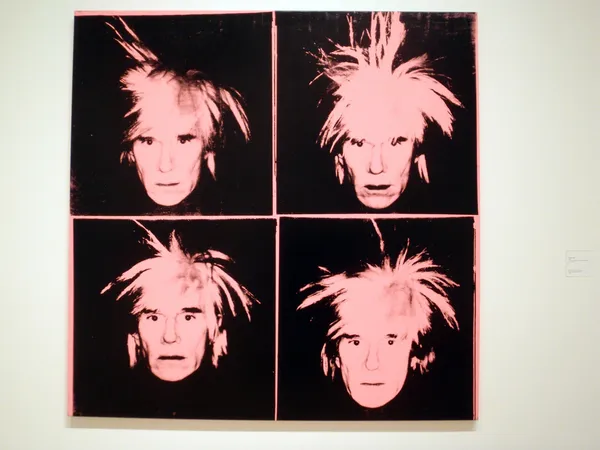
The most expensive Andy Warhol ever sold at auction, Shot Sage Blue Marilyn ($195 million in 2022), had also once belonged to S.I. Newhouse before he sold it years earlier. The same collector’s influence reappears at the top of the market because his reputation for strict quality became a seal the market learned to trust and pay for.
In one way, the provenance premium makes perfect sense because it really does lower real risk, and in a market with fakes and stolen works, that risk is real. But in another way, it is a big example of social proof, where the price is partly set by the prestige of past owners rather than anything about the artwork itself. The deeper point is that provenance is not just background; it is part of the value.
The buyer of Number 7A paid for a magnificent painting and also paid a substantial sum for the documented fact that it had belonged to the right people. That is the payoff of provenance: the market treats an object’s history as part of its value, not just a description of it.
If two physically identical paintings can differ in value by tens of millions of dollars just because of their ownership history, how much of what we call a masterpiece’s “value” is really in the artwork itself, and how much is in the story we can prove about it?
This article was written for EconMinded: exploring the economics behind markets, art, and luxury at econminded.com.
Sources: ARTnews, “S.I. Newhouse’s Jackson Pollock Sells for Record-Breaking $181.2M” and “Who’s Selling the Top Works in the May Sales?”; Artsy, “17 New Artist Auction Records Set in May 2026”; The Value, “Jackson Pollock Drip Painting Sells for US$181M”; NBC News, “Art Collection of Media Titan S.I. Newhouse”; Art Basel, “Art Market Report: The Modern Masters Are Back.”